The US History Blog

  • Benjamin Holt 1849-1920 – Caterpillar Inc.

    January 27th, 2023

    Benjamin Holt was born in Concord, New Hampshire in 1849 and was the youngest of four brothers. Having been born to a hard-working blue-collar father who owned a sawmill making hardwood for wagon coaches, entrepreneurship and industriousness came natural to Benjamin at a young age. In the late 1800’s, Benjamin would find himself in California where he and his brothers would form the Stockton Wheel Company where Benjamin would design and patent new ways to move supplies and material throughout the Western United States. His patents for tractor engines and track treads would eventually lead to the creation of Caterpillar Inc. in 1925.

    Stockton Wheel Company, nd. tocktonwheel.com

    Prior to the 1900’s, there were many attempts by individuals to construct machines that would move on crawler or track-like treads with little success. 1 Benjamin’s invention of the steam engine and his ability to successfully operationalize track treads revolutionized mobile mechanization in ways that have led to improvements in economic growth and development throughout the United States and abroad.

    Although Benjamin sought efficiencies and improvements in the use of agricultural logistics, his inventions had far-reaching implications and it was not long until his patent for track treads would see use in World War I and his tractors would see heavy use across the battlefields of Europe in lieu of horses.
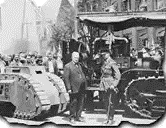
    One of the first Caterpillar tractors. Stocktonwheel.com

    While exploring new markets for the Caterpillar, in November 1913 Benjamin wrote a letter to then Senator Miles Poindexter, Chairman of the Senate Committee on Expenditures in the War Department explaining to Mr. Poindexter how Holt Manufacturing Company “has a special type of Caterpillar equipped with a two-speed transmission which will enable the War Department to reduce its horse flesh in time of war, very materially. We have already shipped some of these machines to foreign lands and we are meeting with more or less success in interesting various War Departments in Europe in this type of Caterpillar.”[i] It was not until 1915 with the War Department decided to test the Caterpillar’s at the Rock Island Arsenal in Illinois. As a result and according to The California Agriculture Museum, “in November 1918, a total of 676 Holt 120 Crawler tractors were made for the war effort at a cost of about $6875 each.  They represent early track-type tractors with a front tiller wheel and they were designed to outlast and replace horses that were vulnerable to gun fire, exhaustion, and famine.” 2
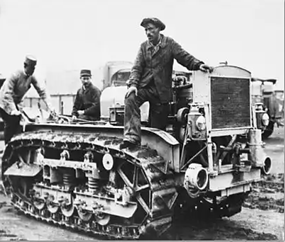
    Caterpillar Track Trials, WWI – Mary Evans Picture Library
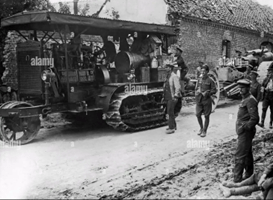
    Caterpillar tractor with heavy gun, Western Front WW I – Alamy.com

    By 1909, the Holt Manufacturing Company purchased failing implement maker Colean Manufacturing Company and the two merged to become the Holt Caterpillar Company and soon after Benjamin had Caterpillar trademarked. The post-World War I economy was on the brink of the Great Depression which resulted in decreasing sales of Benjamin’s tractors. Due mostly in part to cancelled military contracts and heavy investments in R&D that resulted in little to no return on investment for Benjamin at the close of the war in 1918. 3 

    By this time, Benjamin shifted his focus from developing predominately agricultural machinery to machinery that would be used to facilitate and help with the construction of America’s growing network of roads which would prove vital in America’s continued western expansion with the proposal of the Federal Highway Act which would not be signed into law until November 9, 1921. Unfortunately, Benjamin would not live to see his Caterpillars put to work on the vast network of road development.
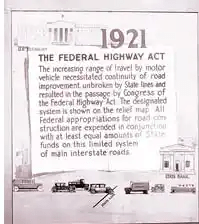

    The Federal Act, 1921 – Federal Highway Administration.

    Benjamin died on December 5, 1920 of an unknown illness and five years later his Holt Caterpillar Company would merge with C.L. Best to form what is known Caterpillar Inc. The post-war economy after World War I would find itself on the cusp of the Great Depression lasting until 1929. During these turbulent economical times and dwindling demand for Caterpillar’s within the United States, Caterpillar stayed afloat by exporting its products overseas which consisted of roughly half of their sales. In comparison, the automotive industry was gaining traction with the production of Henry Ford’s Model T and Model A automobiles. Driven by demand, production for the Model A increased from 108,127 Model A’s in 1928 to 216,626 Model A’s by 1929. 4  The average cost for a consumer to purchase a Model A in 1929 was $500 which would suggest an annual estimated gross revenue of $108,313,000 for Ford’s Model A in 1929 which is double compared to reported Caterpillar sales of $52 million in 1929.[i]5 Despite economic conditions of the time, we also must consider the variables included in these differing production cycles such as time, materials, labor, manning and cost of goods, etc. However, today Caterpillar Inc. has grown to become a multi-billion-dollar industry and its sphere of influence is global. Having been founded almost 100 years ago, Caterpillar Inc. continues to “break ground” for all types of industries employing its use.
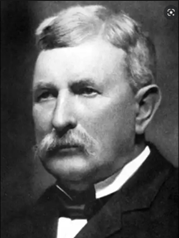
    Benjamin Leroy Holt – invent.org

    5 Caterpillar Inc. “Caterpillar Celebrates 85 Years on the New York Stock Exchange. Last Modified n.d. https://www.caterpillar.com/en/news/corporate-press-releases/h/caterpillar-celebrates-85-years-on-the-new-york-stock-exchange.htm.

    4 Motortrend. “Model A Coupes – Heir to the Throne. Last Modified February 11, 2011. https://www.motortrend.com/features/1102sr-model-a-coupes/.

    3 Farm Collector. “Caterpillar Tractors in World War I.” Last Modified 2022. https://www.farmcollector.com/company-history/caterpillar-tractors-world-war-i/.

    2 ibid.

    1 Wik, Reynold. “Benjamin Holt and the Invention of the Track-Type Tractor.” Technology and Culture. Jan. 1979, Vol 20, No 1 (Jan. 1979), pp 90-107. The John Hopkins University Press and the Society for the History of Technology. https://www.jstor.com/stable/3103113.
  • The Steel and Lumber Industries during Postbellum 1865-1900

    August 29th, 2022

    The United States economy underwent a significant transformation during the decades following the end of the Civil War in 1865. As an up and coming industrial and manufacturing powerhouse, by the 1880’s the steel manufacturing industry in the United States would be producing and providing 10 million tons of steel by the end of the 19th century. [1] Furthermore, the lumber industry in the Great Lakes Region witnessed an increase in lumber shipping per Rail Feet from 149,672,900 in 1885 to 379,000,000 by the end of 1897. [2]

    The methodology used to perform this research consisted primarily of the analysis government records, archives, newspaper articles, census data, market reports and trade publications. The sources used during this research helped facilitate the comparative research that was required to determine weights and measurements, revenue, and supply and demand in order to draw a comparison between the target data.

    There is no shortage of published research and articles addressing the Civil War and its impact on the American economy. Furthermore, one can also find ample information on the Postbellum period addressing how the economy in the North was booming while the economy in the South was in decline. Despite this difference, the country came together to create an economic revolution fueled by the steel and lumber industry which would contribute to the completion of the trans-continental railroad and increased infrastructure development. To better understand the steel industry during the 1880’s and the reasons for its remarkable economic growth, we must examine the precursor’s that gave rise to its demand. We can examine the weapons and equipment used during the Civil War and how innovation and technology evolved with the use of steel. Weapons of war such as muskets, artillery, bayonets, swords, and naval vessels resulted in a heightened awareness of the practical uses of steel as a resource for much bigger things in mind. The manufacturing of steel during the Postbellum period was stated as “the measure of economic power in the last part of the nineteenth century was steel, the miracle metal of the age. Steel, which is iron with a carefully controlled amount of carbon added, had been known since at least 1000 B.C. Its advantages over iron are many. It is harder, takes a better edge, and is much less brittle, making it better able to withstand shock.” [3]

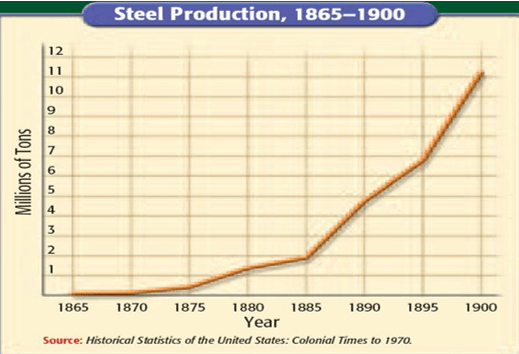
    The widespread use of steel in the railroad industry and for the construction of buildings, factories, and bridges during the latter part of the 19th century can be considered a direct result in the technological innovation to manufacture steel cheaper and more cost effectively.  According to the graph below provided by the Historical Statistics of the United States: Colonial Times to 1970, steel production in the United States witnessed a significant increase in 1.5 million tons of steel produced in 1880 to slightly over 11 million tons by 1900. [4]

    Steel Production by Millions of Tons, 1865-1900

    The evidence provided in this graph demonstrated how demand for steel during the Postbellum period led to improved methods, and technological innovation in steel production in the United States. “By the end of the century, the United States was turning out 11,227,000 tons, more than Britain and Germany combined.” [5]

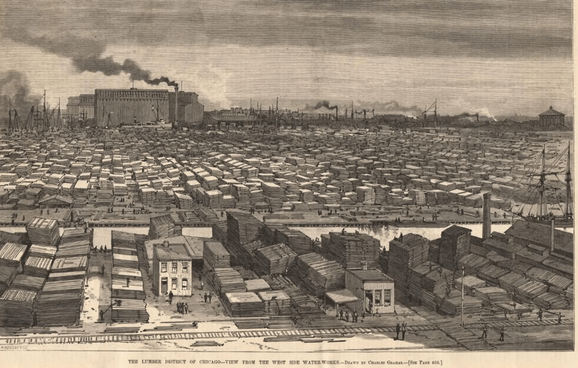
    Chicago and The Great Lakes Lumber Trade

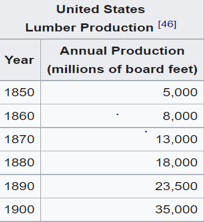
    An additional resource that saw a heightened increase in demand during the Postbellum period was lumber. Lumber, like steel is a valuable resource used in the construction of buildings, railroad tracks, furniture, etc. Although not as strong or as durable as steel, new uses of lumber were identified along with new methods of harvesting to meet the increase in demand for this natural resource. The Great Lakes region of the United States was the largest producer of timber and as the following graphic illustrates, lumber production increased from 18,000,000 boards per feet in 1880 to 35,000,000 boards per feet by the close of the 19th century. [6]

    United States Lumber Production (millions of board feet), 1850-1900

    The correlation between the amount of steel and lumber in tons produced between 1880-1900 varies considerably. To accurately compare lumber and steel production in terms of tons produced, we have to convert lumbers board feet to tons. 1200 board feet of lumber is equal to 1 ton. Therefore, 35,000,000 board feet of lumber is equivalent to 29,167 tons. From this perspective, more lumber was produced between 1880-1900. To provide a comparison in terms of revenue, the lumber industry had total capital of $611,611,524 in 1900. [7] Compared to the lumber industries, “the country exported only $6 million worth of iron and steel products in the year before the Civil War, in 1900 the United States exported $122 million worth of locomotives, stationary engines, rails, electrical machinery, wire, pipes, metal-working machinery, boilers, and other goods alone.” [8]

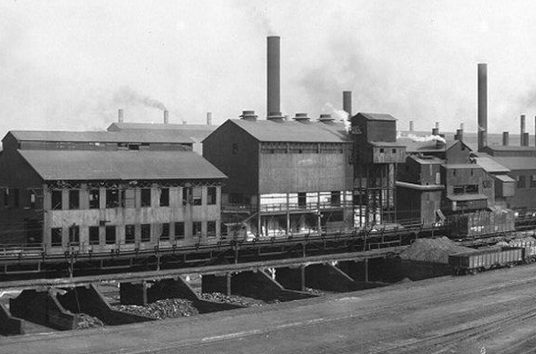
    Andrew Carnegie Steel Company by 1900

    Although the lumber industry experienced record revenues for a short period of time that exceeded the steel industry, the steel industry enjoyed more reliable sustainability and demand along with increasing profits with the mergers of Carnegie Steel Corporation, Federal Steel Company, National Steel Company. These mergers would soon become known as U.S. Steel with a capitalization of $1.4 billion. As a result, the steel industry became the top industry by the close of the 19th century and early 20th century. By 1901, several mergers led by J.P Morgan formed the United Steel Corporation. [9]


    7 United States Census. “Lumber.” 1899. Accessed on August 26, 2022. https://www2.census.gov/prod2/decennial/documents/05457254v9ch7.pdf.

    8 American Heritage Magazine. “The Age of Steel.” Vol 52, no. 1 (2001): pp1. https://www.americanheritage.com/age-steel.

    9 Harvard Business School. “The Founding of U.S. Steel and The Power of the Public Opinion.” Baker Library Bloomberg Center. Last Modified 2022.


    5  American Heritage Magazine. “The Age of Steel.” Vol 52, no. 1 (2001): pp1. https://www.americanheritage.com/age-steel.

    6  United States Forest Service. The Lumber Cut of the United States. 1907. Government Printing Office. 1908. p. 7.


    3  American Heritage Magazine. “The Age of Steel.” Vol 52, no. 1 (2001): pp1. https://www.americanheritage.com/age-steel.

    4 United States Census. “Bicentennial Edition: Historical Statistics of the United States, Colonial times to 1970.” September 1975. Accessed on August 29, 2022. https://www.census.gov/library/publications/1975/compendia/hist_stats_colonial-1970.html.


    [1] National Material Company. “A Brief History of the American Steel Industry | National Material Company – Steel Processing Facilities.” Last Modified 2022. https://www.nationalmaterial.com/brief-history-american-steel-industry/.

    [2]  Maritime History. “History of the Great Lakes.” Last Modified Unknown. https://www.maritimehistoryofthegreatlakes.ca/documents/hgl/default.asp?ID=c027.

Blog at WordPress.com.


Loading Comments...
 

    • Subscribe Subscribed
      • The US History Blog
      • Already have a WordPress.com account? Log in now.
      • The US History Blog
      • Subscribe Subscribed
      • Sign up
      • Log in
      • Report this content
      • View site in Reader
      • Manage subscriptions
      • Collapse this bar