The relation of Christianity to civil government in the United States was evident since before the founding of our great nation. The majority of our Founding Fathers held deeply religious convictions and acknowledged our Creator and His Divine providence. The Founders were aware of how for in order for our nation to survive, Christian virtues and its guiding principles were intimately connected with civil government. In 1833, Reverend Jasper Adams delivered a sermon to the Diocese of South Carolina and provided arguments how Christianity is the foundation of American government.
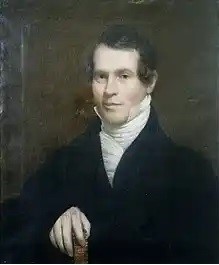
Jasper Adams was born on August 27, 1793 in East Medway Massachusetts. As a graduate of Brown University in 1815, Adams would continue his studies in theological seminary at Andover, Massachusetts and complete his Master of Arts degree from Yale in 1819 and obtain a Doctorate in Sacred Theology from Columbia in 1827. Throughout his career, Adams would work as a teacher and serve as president at the College of Charleston, South Carolina and the Geneva College in New York in 1826.[1] Adams would eventually become the chaplain at West Point, New York in 1838 but not before he delivered his sermon titled “The relation of Christianity to civil government in the United States” to the Diocese of South Carolina expressing the validity and need for Christianity to remain at the foundation of government.
[1] Johnson, Rossiter, ed. (1906). “Adams, Jasper”. The Biographical Dictionary of America. Vol. 1. Boston: American Biographical Society. p. 41. Accessed on April 3, 2023.
In his sermon to the Diocese of South Carolina in 1833, Adams often referred to scripture to support his arguments. To lay the foundation and to provide credence for his position, Adams referred to 1 Peter 3:15, Proverbs 14:34 and Revelations 11:15.[1] Adams opened his sermon by saying, “As Christianity was designed by its Divine Author to subsist until the end of time, it was indispensable, that it should be capable of adapting itself to all states of society, and to every condition of mankind.”[2]
Early settlers as early as those who signed the Mayflower Compact in 1620 mentioned “God” four times and alluded to Providence and the Christian faith throughout the Compact. In Jasper Adams’ The Relation of Christianity to Civil Government in the United States, Adams noted how in 1644, Charles I encouraged colonists to be exhorted by “their good life and orderly conversation, to winne and invite the natives of that country to the knowledge and obedience of the onely true God and Savior of mankind and the Christian faith.”[3] In 1682 in the Charter of Rhode Island granted by Charles II, it was noted the colonists were to pursue “with peace, loyal minds, their sober, serious and religious intentions of godly edifying themselves and one another in the holy Christian faith and worship.”[4] These historical sentiments made by governmental authorities casts no doubt of the early intentions to found and grow a new nation based on Christian principles.
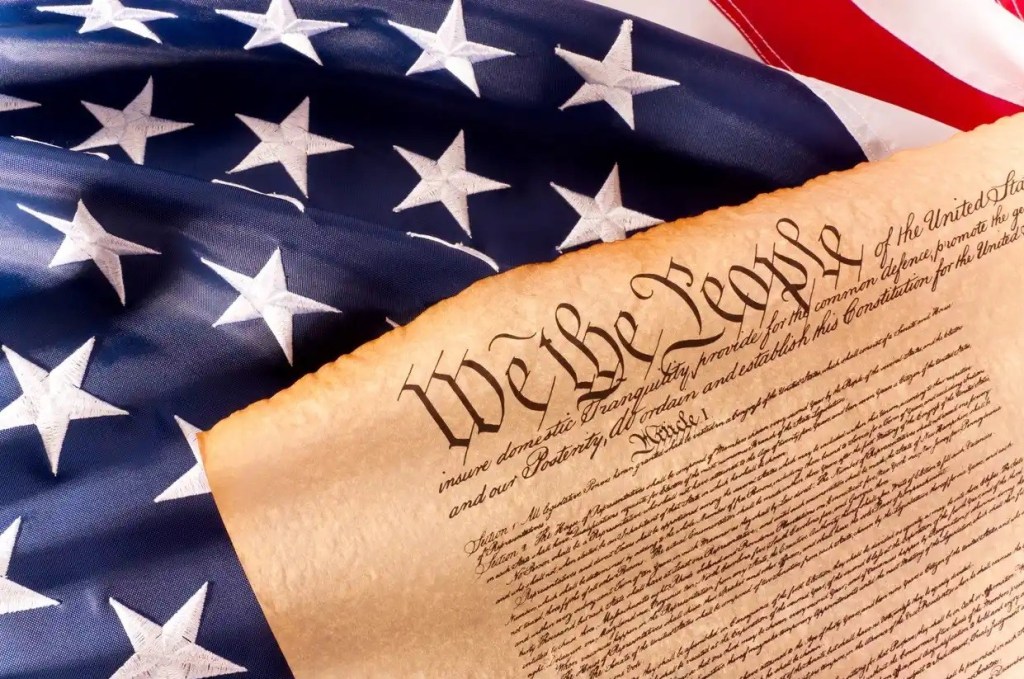
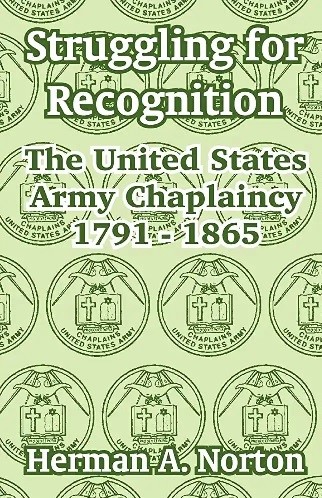
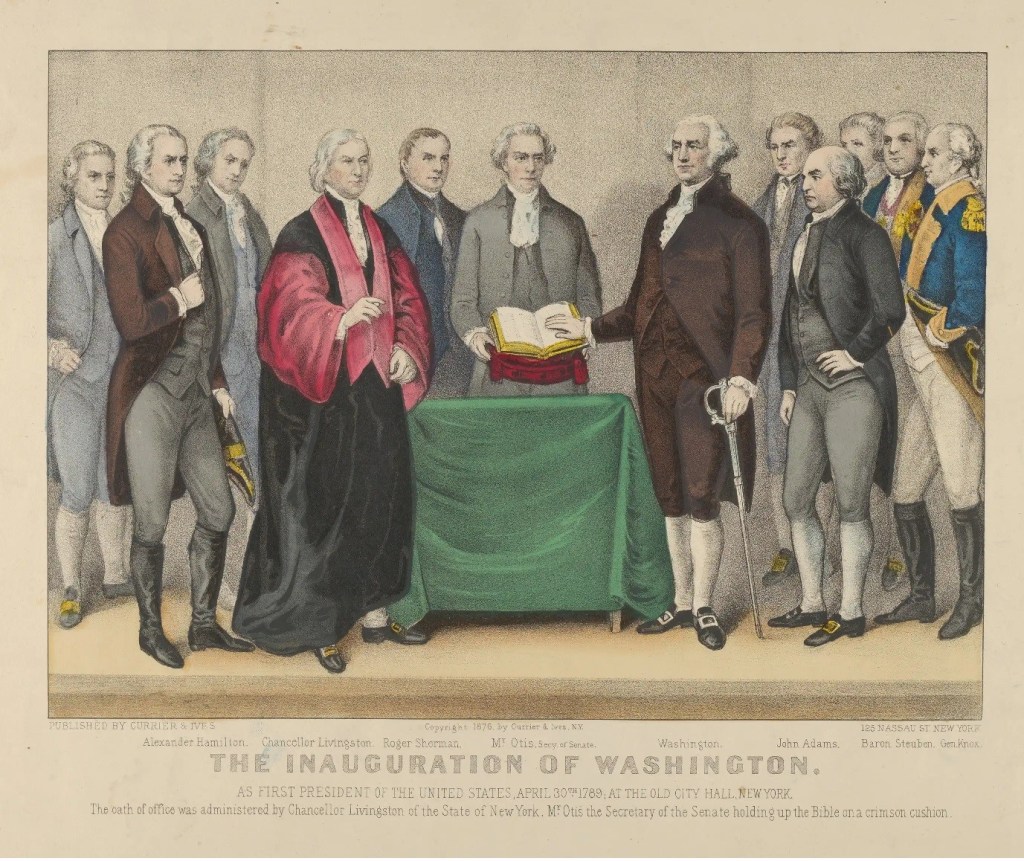
Adams argued how the Constitution of the United States contains specific language and reference to the religion where the Founders specifically professed how the United States is a Christian nation. The integration of Biblical principles that are evident in and throughout our government despite significant efforts and popular opinions to suggest otherwise. Consider how governmental legislative bodies often open up their assemblies with prayer, their offices closed on Sunday’s, the official use of Chaplains in our Armed Forces since 1791 and the use of the Bible in the swearing in for oaths of office. These are just a few examples of how Christianity has been and remains at the core of our national government despite efforts to minimize, ignore or remove any relations to God whatsoever.
[1] Hall, David. “The Relation of Christianity to Civil Government in the United States.” Place for Truth. May 17, 2016. Accessed on April 3, 2023. https://www.placefortruth.org/blog/the-relation-of-christianity-to-civil-government-in-the-united-states.
[2] Adams, Jasper. “The Relation of Christianity to Civil Government in the United States.” Religion and Politics in the Early Republic. 1996, pp. 39-58. Accessed on April 3, 2023. https://www.jstor.org/stable/j.ctt130jpcx.7/.
[3] iBid.
[4] iBid.
If Christianity is absence from our civil institutions, then degradation and destruction will ultimately ensue. Historically speaking, Christian nations have risen to superiority more so than those nations where the practice of Christianity was either absent or prohibited. In 1827 Ezra Stiles published The Duty of Christian Freemen to Elect Christian Rulers: A Disclosure on the Fourth of July 1827, in the Seventh Presbyterian Church in Philadelphia, Stiles observed how rulers are equal to those of the populous and should search the scripture, assent to its truth, profess faith in Christ and keep the Sabbath holy to God.[1] It is the duty of those in government to do the Will of God as God judges nations and rulers equally.
[1] Ely, Stiles Ezra. “The Duty of Christian Freemen to Elect Christian Rulers: A Disclosure on the Fourth of July, 1827, in the Seventh Presbyterian Church in Philadelphia.” Gale Primary Sources. 1828.
 The US History Blog