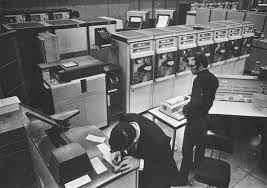
Source: IEE Computer Society
The 1950’s was a time of astronomical technological innovation, and this gave rise to what we know of today as the Digital Age. According to the Cambridge Dictionary, “Digital Age” is defined as “the present time, in which many things are done by computer and large amounts of information are available because of computer technology.”[1] The Digital Age, also known as the Information Age, began during the mid-20th century shortly after World War II. It was during World War II when scientists and engineers began developing machines to perform complex calculations for ballistics and trajectories for the military. During the war, Alan Turing invented the Bombe device that was used by the Allies to break the German Enigma cipher. Advances in cryptography coupled with the development of computing technology would soon give rise to government organizations whose existence was built around technology. Although the Axis Powers had been defeated by the Allies to bring World War Two to an end on September 2, 1945, a new global threat emerged with the Soviet Union. Ideological differences and geopolitical differences between the United States and the Soviet Union would usher in a new era of warfare known as the Cold War in 1947. During the same year, Harry S. Truman signed the National Security Act of 1947 authorizing the creation of the Central Intelligence Agency (CIA) with the mission of collecting foreign intelligence to protect the United States from adversarial actions. The CIA’s principle means of monitoring and intercepting foreign intelligence is via the use of technology; technology that originated from advances in research and proof of concept operations during World War II. Five years later, Truman created the National Security Agency (NSA) in 1952 having “grown out of the communications intelligence activities of U.S. military units during World War II.[2] Within the private sector, the computer industry began to flourish with the likes of International Business Machines (IBM), Honeywell, and Sperry Rand. These corporations would become pioneers and partners with the USG in advancing computing and information technology for the country and eventually at the global level. Innovations in transformers, microprocessors, programming languages were all considered emerging technologies with commercial and military applications with these technologies becoming essential in countering Soviet aggression during the Cold War.
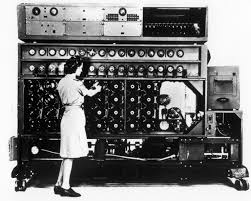
Source: National Museum of the United States Air Force
Throughout this research I am seeking to uncover how technology allowed the United States to outpace and outperform the Soviet Union to win the Cold War. Furthermore, an analysis will be provided that draw a nexus between technology and the establishment of the national defense military complex, as well as the private sector technology industries that were created and collaborated with the USG in winning the Cold War. Although the benefits and the strengthening of the USG’s national security posture as benefited from technology, so too has the private sector but at a cost. This research will further expose the technological dangers and threats to national security and the American way of life and what measures that can be taken to minimize those threats.
This research is of historical significance as it will show how advances in technology advanced at a rapid pace and adopted rather quickly throughout the USG and the private sector with what appears to be little thought given about its risks despite its successful rewards. Furthermore, this research will fill existing gaps in current Cold War technology historiography. Prior to the 1960’s, there is little scholarship available to the public regarding this area of research. Yet, there are ample studies provided by the scientists and technologists who were developing and creating the actual technology. My research will examine the works of these mid-20th century technology pioneers and provide the historical context that is needed to advance my research.
A number of historical problems have already been identified and these problems have driven my research questions. Based on my 20+ years working in the Information Technology and Cybersecurity fields in the United States Air Force and Department of Defense, I have simply observed how technically minded individuals are not the best at professional writing or documenting in clear and concise ways for the layperson to understand. This in and of itself has posed many challenges and limitations in understanding what technology is, what it has done, what it can do and what the positive and negative aspects are from a national security perspective. For example, in our modern era, only those who are creating Artificial Intelligence (AI) are the ones who know exactly what it is and what it can do. The average individual, however, does not. They simply hear about AI on the news and all the “great” things it can do and there are many. However, when it comes to the dark side of AI, we only briefly hear about its dark side. The second problem I have come to learn about not only through my professional career, but also through the study and examination of scholarly and published work by so-called “experts” in the field. I am fortunate to have the knowledge and experience to quickly identify falsehoods and fallacies when it comes to historical writings about technology. From both professional and academic perspectives, I believe I will be able to overcome and correct inaccuracies in current and previous research and apply these corrections to complete accurate research.
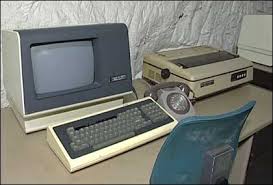
Source: BBC
The methodology used for this research consists of examining the science and technology, military and social categories and how each category influenced and impacted the weaponization of technology during the Cold War. Quantitative research has been a critical component of this research as it provides supporting context and amplifies and substantiates previous and current research while illustrating how technology effectively proved advantageous to the USG during the Cold War. A qualitative analysis is utilized to provide the overall narrative of the gathered research data. Throughout the qualitative content that has been constructed, a theoretical analysis based on published scholarship from experts in the field of computing technology and Cold War era national defense and military doctrine and strategies has been incorporated.
[1] Cambridge Dictionary, s.v. “digital age,” accessed on August 19, 2024, https://dictionary.cambridge.org/us/dictionary/english/digital-age.
[2] Encyclopedia Britannica, s.v. “national security agency,” accessed on Aug 19, 2024, https://www.britannica.com/topic/National-Security-Agency.
 The US History Blog